The best tips and tricks for choosing the right wetsuit!
Watch the video below to see what to look for when buying a wetsuit. Also, check out our other Telstar's Surftalk videos on our YouTube channel!
How does a wetsuit work?
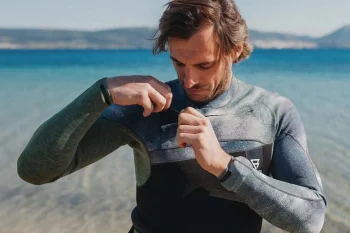
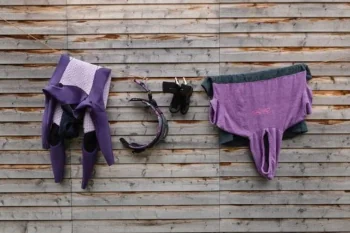
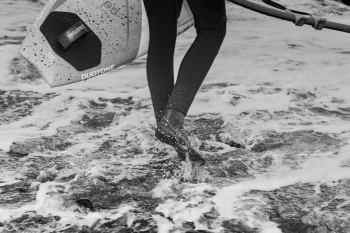
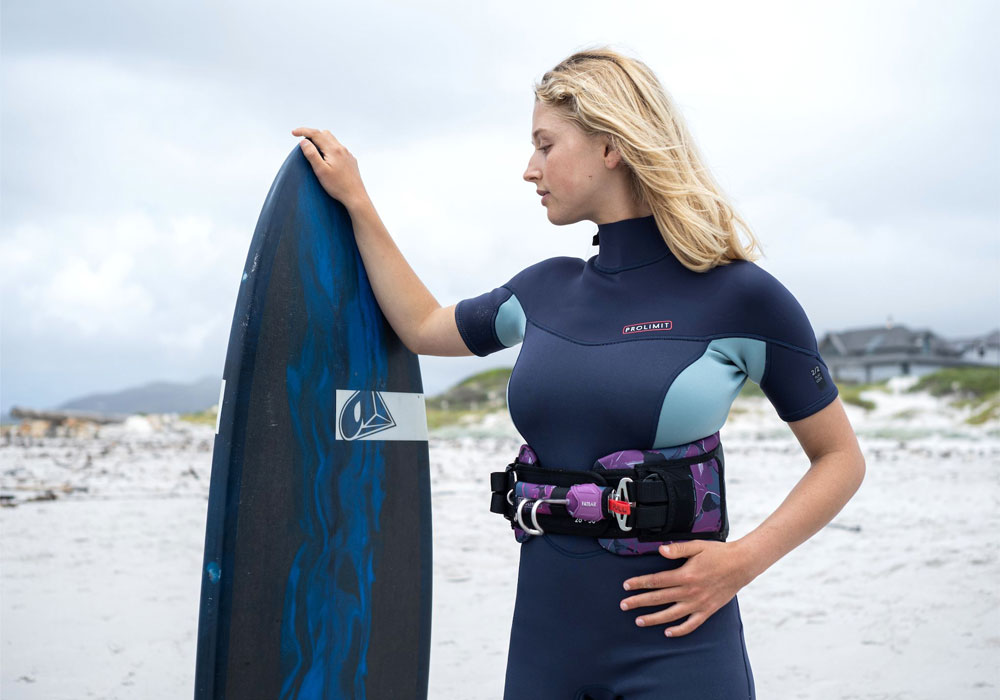
Wetsuits provide protection against the cold while kitesurfing, windsurfing, wingsurfing, wakeboarding, and paddleboarding. In addition, a wetsuit also offers protection against the sun and against rocks, reefs, or stones. A wetsuit is made of neoprene. When you step into the water, a thin layer of water flows into your wetsuit. This layer of water stays between your skin and the wetsuit, warming up due to your body temperature. This helps keep you nice and warm while on the water! On colder days, combine your wetsuit with surf boots and surf gloves.
It’s important to know that the thickness of a wetsuit is expressed in two numbers (for example, 5/3mm):
- The first number represents the thickness on your torso.
- The second number indicates the thickness of the neoprene on the arms and legs.
Types of wetsuits
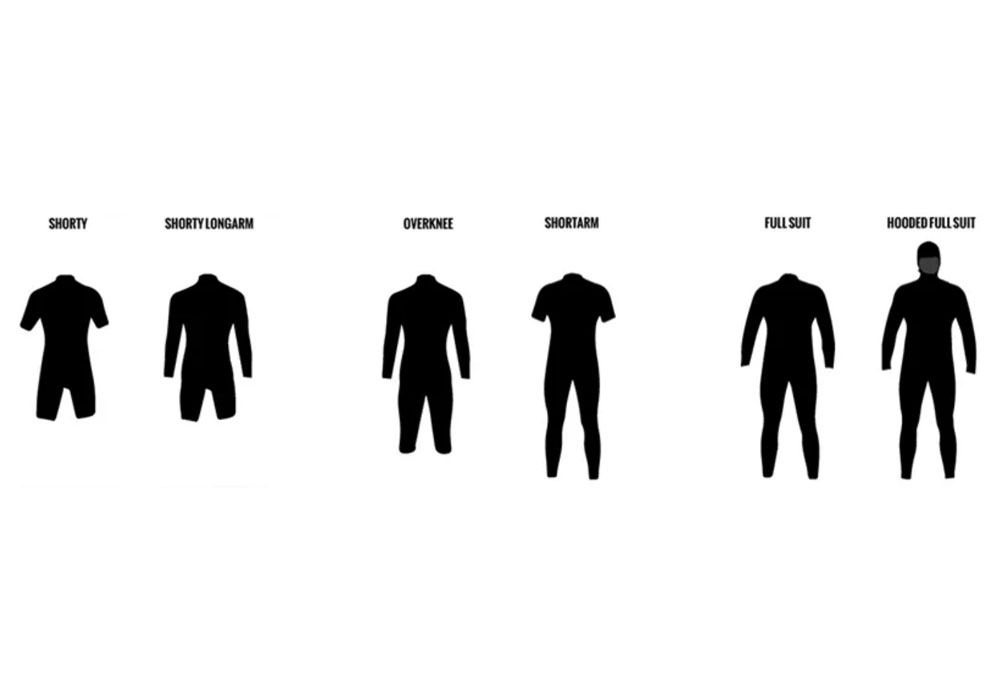
- Shorty wetsuit: shorties are mainly used in summer with warm temperatures. The short sleeves offer a lot of freedom of movement.
- Shorty longarm wetsuit: the shorty longarm is mainly used in summer and spring. The long sleeves offer cold wind and extra warmth.
- Overknee wetsuit: compared to the shorty, the overknee falls over the knee and does not stay above it. This is particularly advantageous for kiters so splashing water does not accumulate around the ankles.
- Shortarm wetsuit: the shortarm is often used in summer and spring. The short sleeves offer great freedom of movement and are less likely to cause cramping.
- Full suit: the full suit wetsuit is the most commonly used type. Therefore, it is available in many thicknesses so that you can cope with all types of weather.
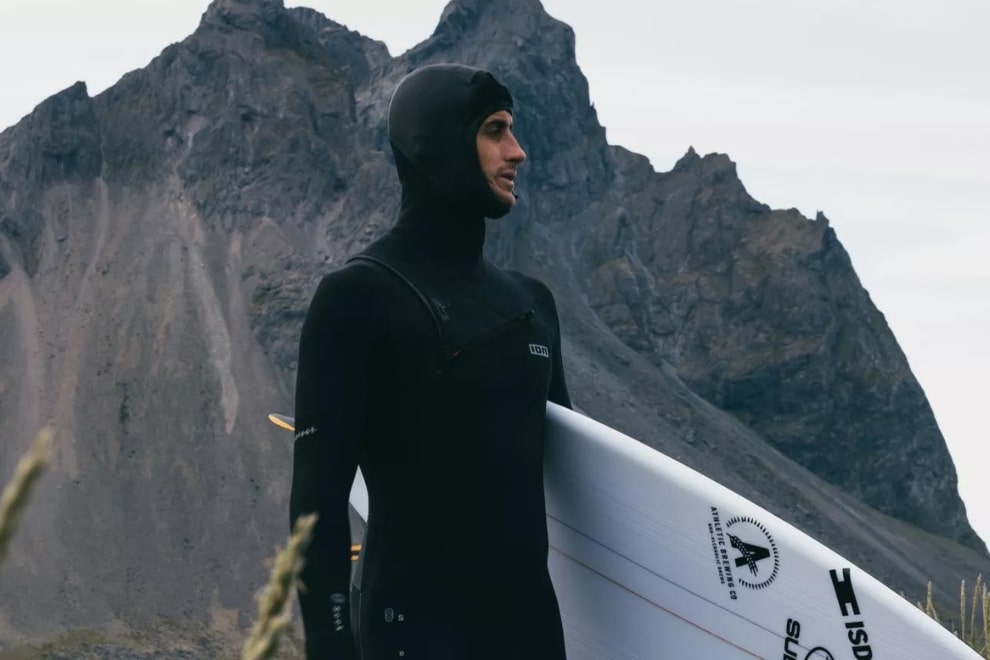
- Hooded full suit: the hooded full suit is most commonly used in the winter months. The hood offers warmth at the head and ears.
Wetsuit thickness
The right thickness of your wetsuit depends on both the season and the location where you surf. The table shows which thickness you need at different temperatures.
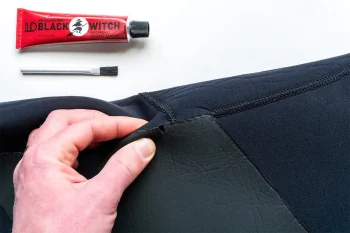
Another factor that influences the warmth of a wetsuit is the seam construction. There are two ways in which the neoprene can be connected. The first method is stitched seams. The downside of this is that they allow water and wind to pass through more easily. The second method is glued seams, which provide extra warmth during your surf sessions, making them ideal for colder days. However, this type of construction is often more expensive.
If you plan to surf year-round in various weather conditions, it can be useful to have multiple wetsuits with different thicknesses so you can adjust according to the temperature. Do you want to manage with just one wetsuit throughout the year in the Netherlands? Then consider a 5/4mm wetsuit. Of course, this does not apply if you only surf during the summer months.
Note: Many brands have their own temperature recommendations, which may differ slightly from this table.
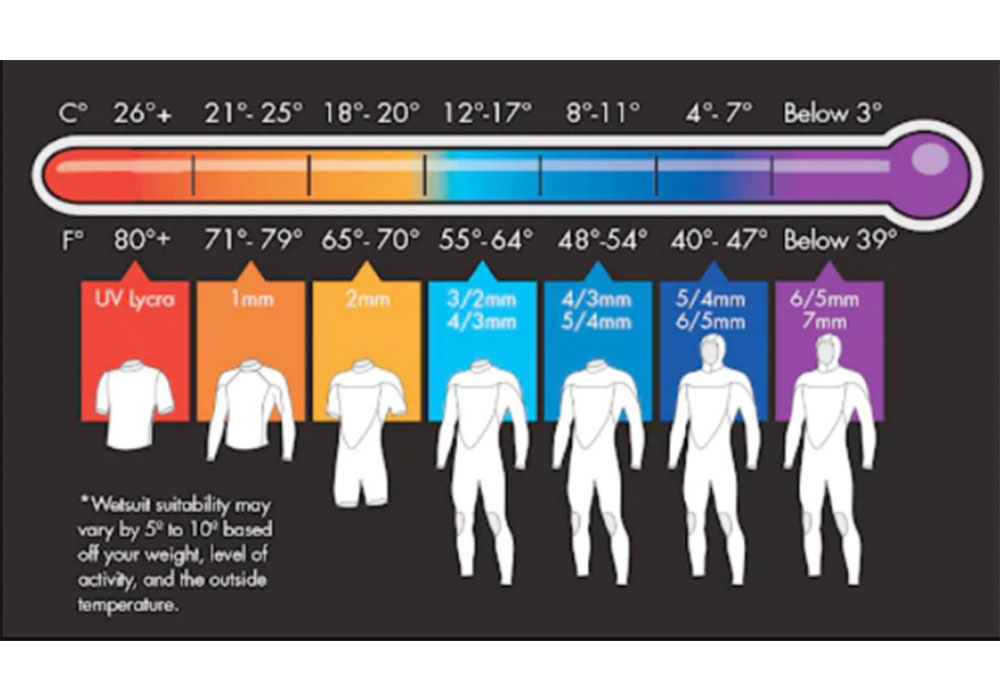
Bron: O'Neill
'STAY NICE AND WARM WITH THE RIGHT WETSUIT!'
What is the difference between a back zip, front zip and zipless wetsuit?
Back zip
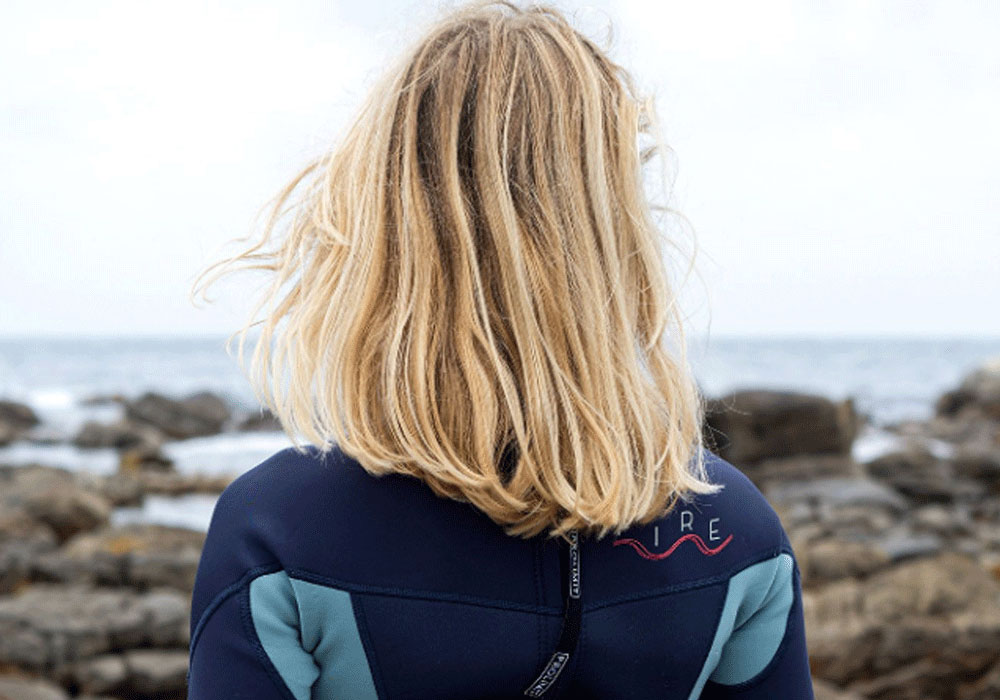
The back zip wetsuit features a vertical zipper on the back. You close the zipper with Velcro, ensuring that the neckline fits snugly against your body.
Advantages:
- Easy donning
- Easy to close
Disadvantages:
- Water gets in more easily
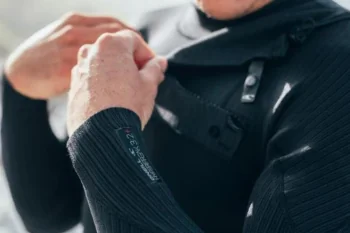
Front zip
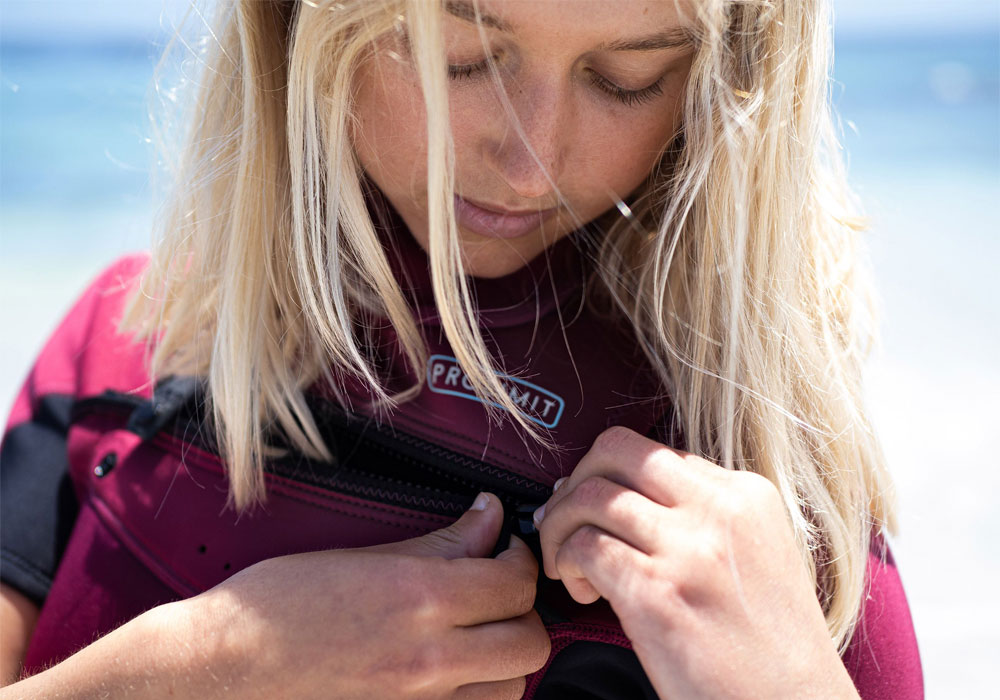
The front zip wetsuit has a horizontal zipper on the chest. The advantage of this type of wetsuit is that it fits closely to your body and lets in less water.
Advantages:
- Lets in less water
- Comfortable and flexible fit
Disadvantages:
- Less easy to put on
Zipless
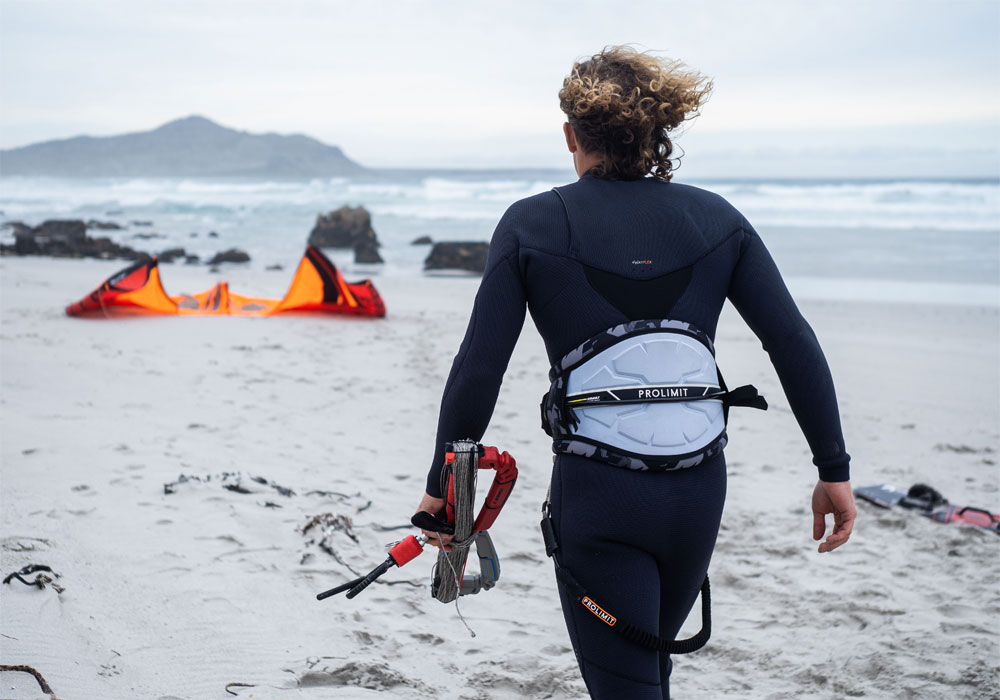
Advantages:
- Very flexible
- Lots of freedom of movement
- Holds back a lot of water
Disadvantages:
- Less easy to put on
Curious about how to put on a wetsuit? Read our blog 'putting on a wetsuit'.
What size wetsuit do I need?
When trying on a wetsuit, it’s important that it fits snugly against your body without being too tight. A wetsuit that is too loose allows too much water to enter, which cools your body down. On the other hand, a wetsuit that is too tight can restrict your movement. Keep the following points in mind when trying on a wetsuit:
- There should be no large air pockets or folds. A wetsuit should fit closely to your body.
- Raise your arms; the wetsuit should stretch along with your movements without feeling too tight.
- Check for large openings around your neck, as these can let in excess water.
Also, read our blog 'wetsuit sizes' In this blog, we provide size charts to help you find the perfect fit.
Note: Each brand uses its own materials and sizing. In general, these sizes are quite similar, but always check the brand’s size charts!
Conclusion
When purchasing a wetsuit, it is important to consider several factors, such as water temperature, wind speed, and session duration. Additionally, there are different types of wetsuits, including variations in thickness and zipper styles. When choosing a wetsuit, it’s also essential to compare different types to ensure you have the best experience on the water!
We hope this blog helps you find the right wetsuit. If you’re still unsure about which wetsuit to choose, our team of specialists is ready to assist you! Feel free to contact us or visit our store.
Curious about how to best maintain your wetsuit? Read our blog!