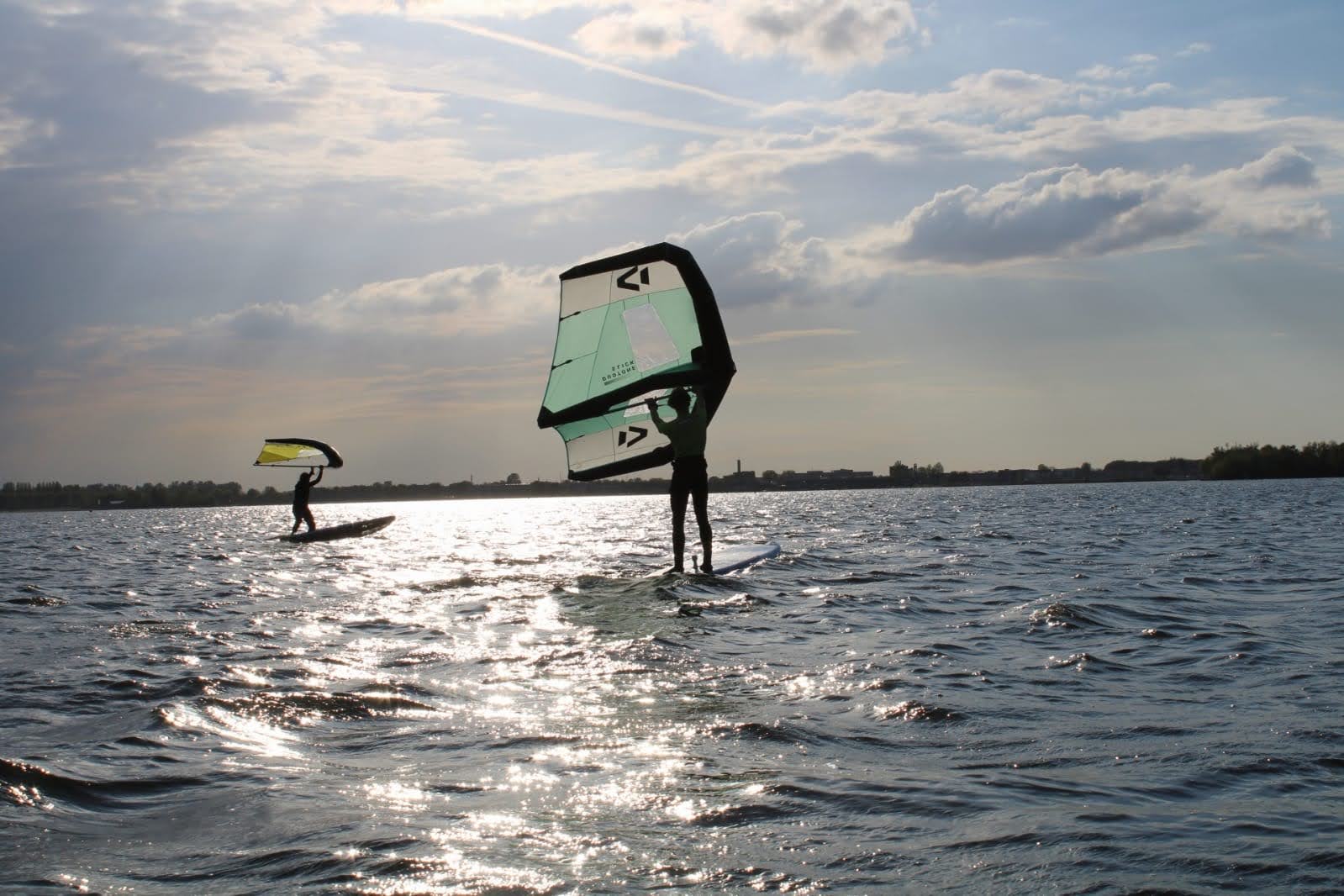
Read about my first experience of wingsurfing in this blog!
Hello all,
In this blog I want to take you on my first Wingsurfing foil adventure. This is my first blog in which I take you into the very latest surf craze called Wingsurfing. Obviously, this surf craze cannot escape me and I must have tried it once.
Below I tell a brief introduction about what wingsurfing is, share my experiences with you and give advice for if you are about to wingsurf for the first time.

A short introduction
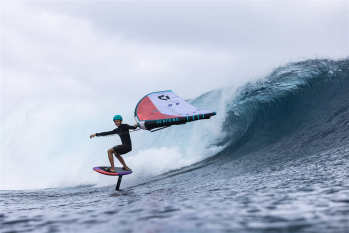
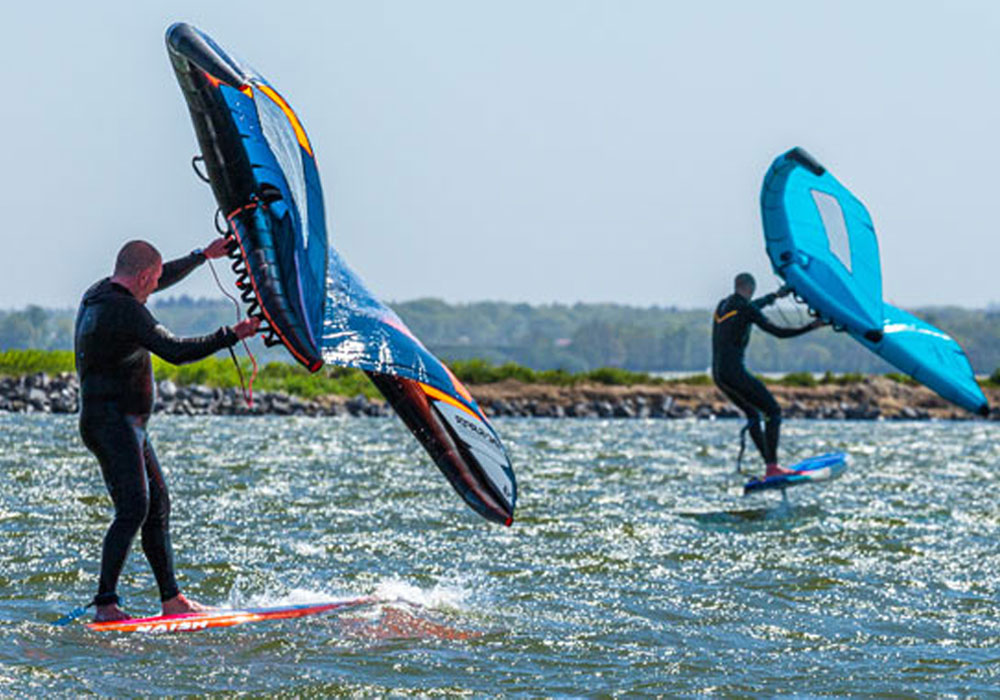
Some call it wingsurfing, others wingsurfing and others wingfoiling. So what exactly is wingsurfing? And what can/do you do with wingsurfing? Wingsurfing is not the same as windsurfing, kiting or wave surfing. It certainly has some similarities with these sports but it is a combination. Wingfishing gives the same feeling as wave surfing, where you move freely over the water. The wing looks like a kind of kite, but without the lines. It also looks a bit like a windsurfing sail, only there is no fixed connection to your board as there is with windsurfing. The board is attached to your leg with a leash and the wing is attached to your arm with a leash.
The sport can be learned by anyone, even if you have no wind-, kite- or wave-surfing experience. However, it does make it easier if you have some experience with these sports. The sport is most similar to windsurfing. I myself have both windsurfing and kitesurfing experience and find that I mastered waving fairly quickly. Once you have mastered the sport a little, you will not only see that it is a super cool feeling to glide over the water, you will also be able to go out on the water with less wind.
On the water
It is Sunday evening and we have agreed to meet up with four colleagues on the other side of Strand Horst; Zeewolde. The wind is from the east, the sun is still shining and the wind is about 14 knots. A perfect evening for wind- and wingsurfing with onshore wind. We managed to arrange two wingsets and a small boat for this session. With a group of four, we can take turns.
Wing rigging
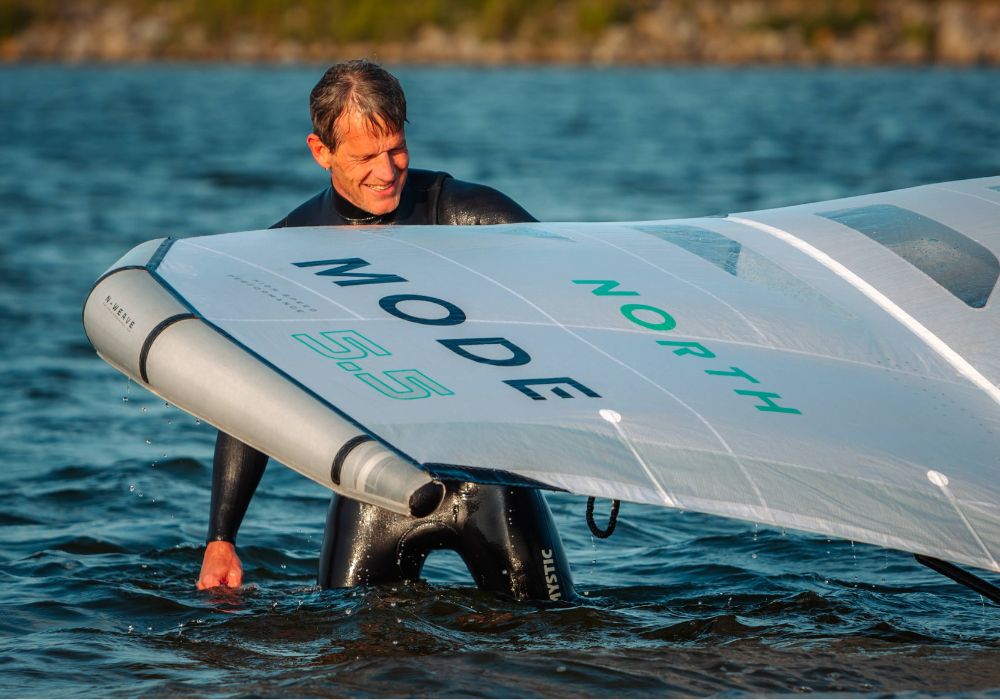
When you use the wing for the first time, you will need to inflate the wing. The first time you inflate Wing, you should bear in mind that you need to attach the wing to your pump first. Otherwise, the Wing will be blown away during pumping. A barometer is attached to the pump so you can see how hard you are inflating the wing. Inflate the wing to 7.9 PSI.
Attach the leash to the wing and attach it to something to prevent it from blowing away, for example to your foil.
'THE FIRST EXPERIENCE OF WINGSURFING'
Board and foil
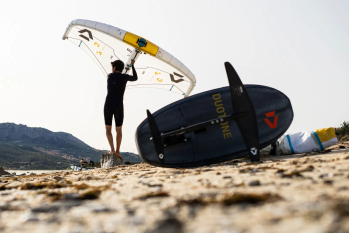
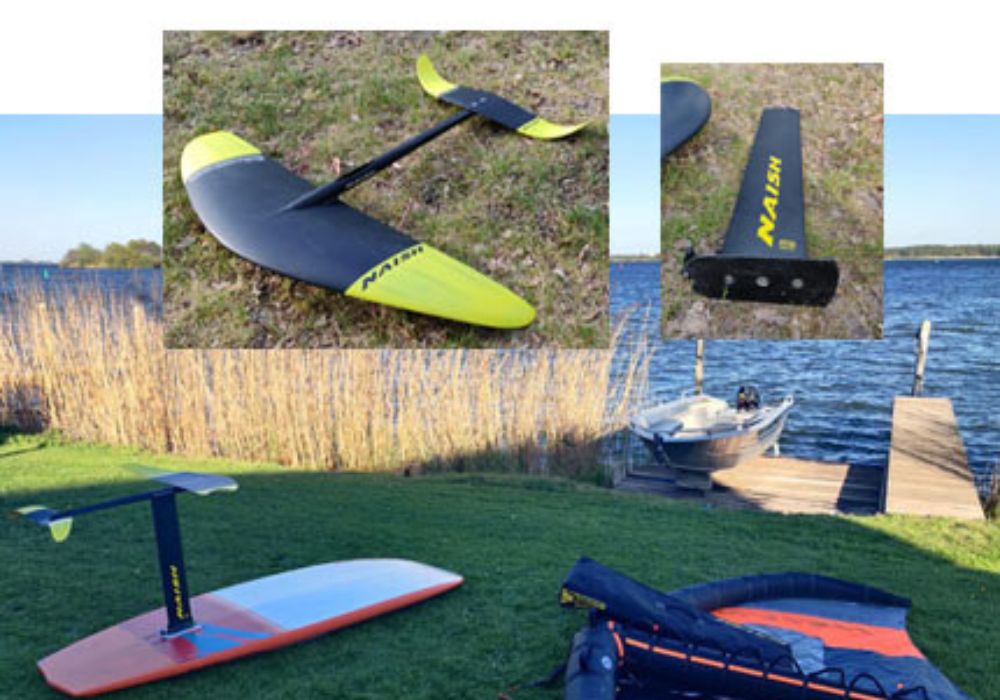
Once the wing is inflated and the leash attached to the wing, the wingsurf board with foil can now be prepared. Thanks to Naish's Abacadabra system, this is easily done. You attach the Abacadabra system once to the underside of your board. When this is the right position for you, you will be able to easily slide the foil in and out each session.
The picture on the right shows the wingfoil I take out on the water with. The middle part is called the Fuserlage. To this you attach the Front- back wing. The front wing, also called blade has a size of 1650. For Wingsurfing, this is a nice size. The last thing to be installed is the mast. The mast I will test this evening has a length of 65cm. The longer the mast, say 90cm the harder it is to practice.
In the water
The time has come, the wingsurfing kit is ready and we are taking to the water! No one has any foil experience so my colleague starts first with his foil behind the boat, purely to get a feel for the foil; 'how does the foil react when it comes up'.
However, I had no patience to wait for those two to finish so I put on my suit, attached the Wing's leash to my wrist and jumped straight into the water with Wing, foil and board. I jump into the water via the riser with the Wing in my hand. I surface, look around me for my board and immediately notice that the board is being taken by the small waves and that I have to be fast... With the Wing in my hand, I swim after the board like an idiot. The board immediately took off due to the wind and wave action. I had to pull out all the stops to keep up with my board. Finally reaching my board, I got down on my knees with the wing in my hand to avoid ending up in the reeds. While sitting down and placing the wing diagonally above my head, I was able to narrowly avoid the reeds while half windsurfing. So my first lesson is: always use a board leash.
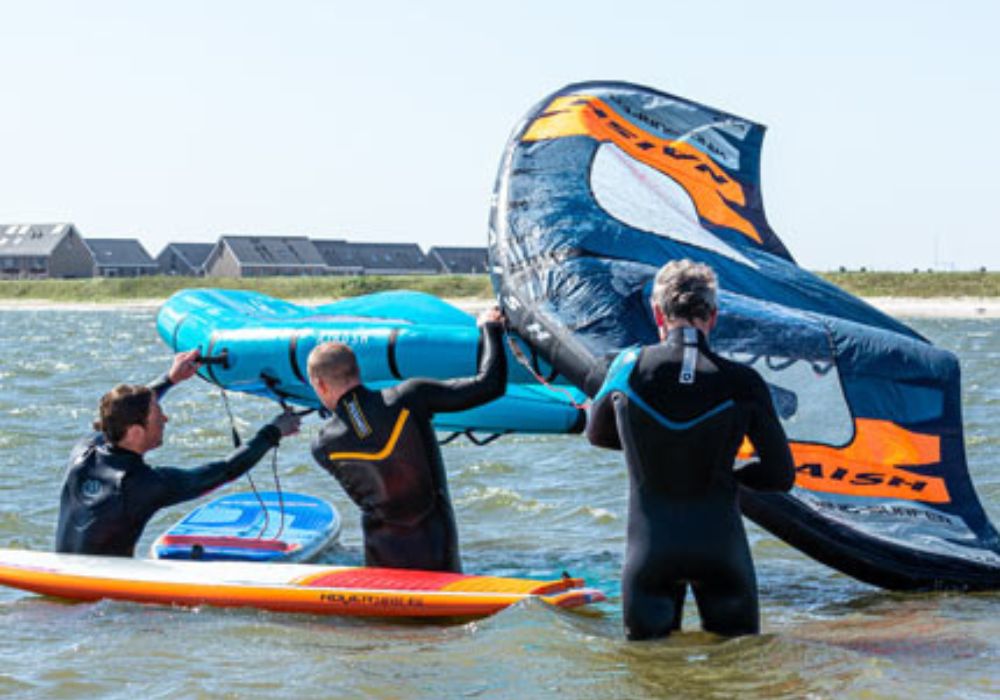
How to wingsurf?
Practice begins. The board I use has a lot of volume: 140 litres. I notice in the beginning that you definitely need this, because you have to be able to stand on the board and keep your balance well before you can even get your wingsurfer out of the water at all. A 140-litre board is therefore definitely not an unnecessary luxury, you stay nicely afloat on the board and finding balance is definitely possible.
After much plodding and fumbling, I discovered that it is useful to lay the Wing well in the water in front of you before jumping on the board. To do this, put the Leading Edge of the wing towards you and put the handles in the water. While jumping onto your board, hold the wing's leash as close to the wing as possible. If you don't, you will quickly notice that the Wing catches wind and while you are busy climbing on your board, the Wing will pull on your arm/wrist, making you lose your balance faster.
After 2 hours of wingsurfing practice
By now, we had alternated several times. Because there were four of us with a boat, we could rotate well. This gave us the advantage of being able to take a break. You constantly have the Wing above your shoulders and the search for balance made it nice to rest now and then. By now, one of us had got a preferred position to the right and the other to the left.
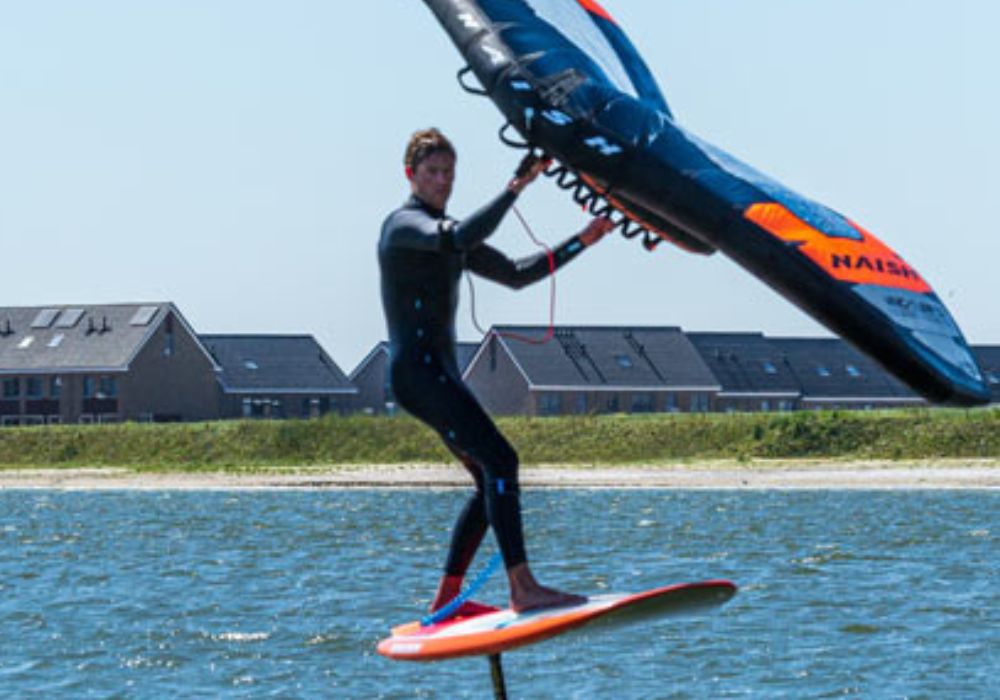
Getting the hang of it
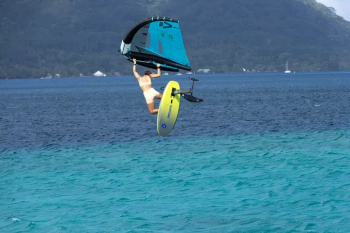
By now I had got the hang of it and was able to create speed. When you create speed you will notice that the foil starts to come up. The board immediately turns at an angle against the wind, so you automatically gain extreme height (because of the foil).
As soon as the foil comes up, you will have to find balance on your board. The most important and tricky thing is to keep the foil in one position. As soon as the foil gets lift and I came out of the water you have to start finding balance on the board. You are looking for the balance point of the foil. In the beginning you shoot up and dive down again, you are basically 'dolphinising'. But all in all, the first 100 metres of flying were a fact after this evening.
Super cool to experience.
Day 2 of wingsurfing
A new day, new opportunities. The wind is a lot stronger today, between 17-24 knots with a clear blue sky and the sun shining nicely. The wind comes from the east and this time we go into the water at the Tulp in Zeewolde. On other days I like to kite with this wind, but since it is forbidden to kite at this spot, and many other spots are closed because of Corona, it is the ideal day to get the hang of Winging. The advantage of this spot is that it is mirror flat, not a wave in sight and therefore probably a lot easier to balance on your board. I hit the water again with the same Naish set (Hover 140 litres) and a 4.6-metre Naish Wing, one size smaller than the previous session.
I get on the board and manage to keep my balance well. I keep the Wing close to me and on the right way on the water. Because the wind is a lot stronger, I position the Wing diagonally above my head and I notice, compared to last time, that I have immediate pressure here. And yes, before I know it, I can engage in foiling. The wind feels so stable that I can now fully focus on the foil and my foot position. I notice that the foot position is very important. By putting the back foot close to the foil the foil will come up faster, when the foil comes up you will move the pressure further forward and in this way you are constantly correcting and feeling what the ideal position is to be able to foil nicely back and forth.
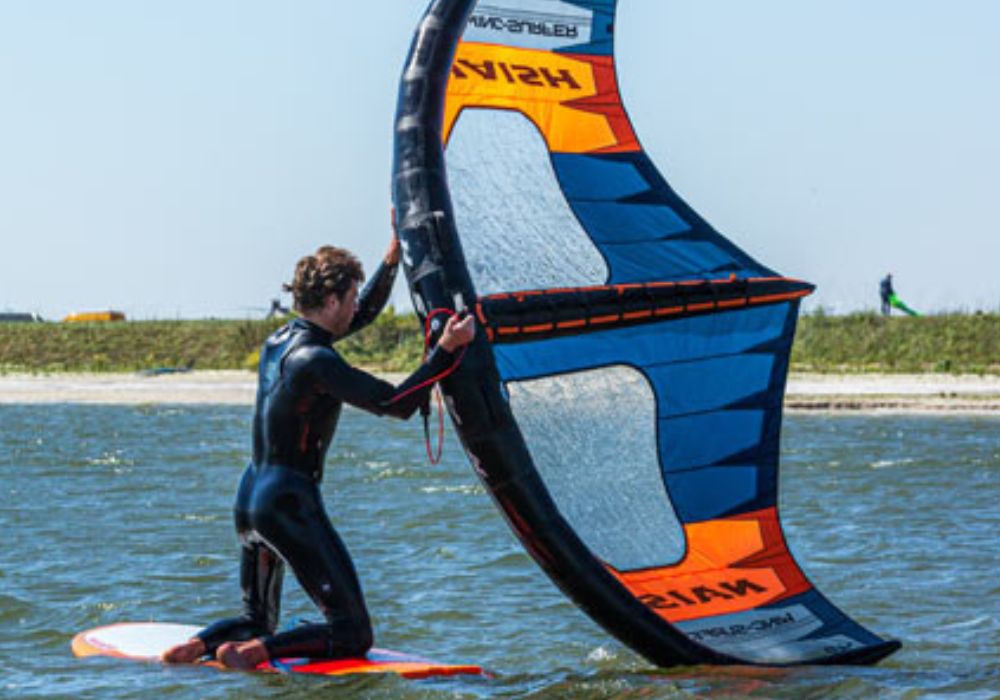
The second wingsurfing session
I have pretty much mastered foiling now. On to the next wingsurfing set. We also had a Starboard set with us this time; a 92-litre board.
When you want to start, you can try to stand on the board all you want, but forget it! As soon as you try to stand, the board will sink from under your feet. Therefore, to get going you will have to start from your knees. Because it was blowing hard that day, I had a lot of pressure in the Wing when I held it above my head.
I tried to move forward a bit and once I created some speed, I noticed that the board and wing felt stable. From the knees you can stand up when you get that speed. Before you know it, the foil comes off the water and you are Wingsurfing.
My advice to start wingsurfing
In the beginning, definitely grab a 120 - 140-litre board. The board is stable, which you will definitely need in the beginning. In addition, I have sailed with a 1650 foil blade. This is a considerably larger blade than what you will use for kitefishing or windfoiling. With this set, you will have a long time of fun in the Wingen.
Equipments:
- Board 120 - 140 Litre
- Wing 4.5 - 5.5 meter
- Foil with a 1650 blade or larger
- Board leash
- Wing leash
Would you also like to learn wingsurfing? You can!
At Telstar Surf, we offer the opportunity to wingsurf for yourself once. Stop by the shop and ask about the test/rental possibilities.
Check our wingsurf collection.
Blog written by: Marco Bremmers
Pictures: Nico Westerink
Product tips
Conclusion
Wingsurfing has been a fun new sport for me. With my background on kitesurfing, wingsurfing opens new doors again for the days when the wind is a little less strong. Personally, I would recommend anyone to give wingsurfing a try, because whether you are young or old: anyone can learn it!
I would recommend taking a number of lessons. You will be guided during the wingsurfing lessons and you can see from a distance where you can improve. This also includes equipment, which is super handy!