
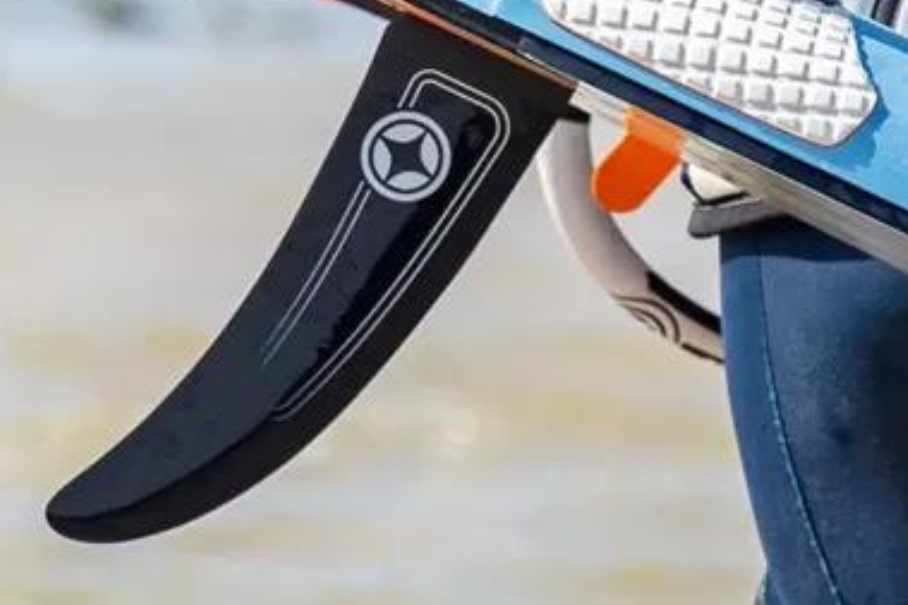
The best tips and tricks for selecting the perfect windsurf fin!
As a windsurfer, you know how important the right equipment is for an amazing session. One crucial, often underestimated component is the windsurf fin. This small powerhouse converts the entire sail area into lift and forward speed, providing control, maneuverability, and overall performance.
Water offers 850× more resistance than air, so a fin has a huge impact on how your board behaves.
With the wrong fin, you’ll almost always sail sub-optimally:
- Fin too small: more frequent spin-outs, poor upwind performance, and difficulty getting on the plane.
- Fin too large: a constant feeling of being overpowered, as if you're surfing with an oversized sail.
It’s not about generating as much lift as possible, but about achieving controllable lift. In this blog you’ll learn what to look for when choosing the ideal windsurf fin, so you can enjoy maximum fun and speed in every session.
Fin size and length
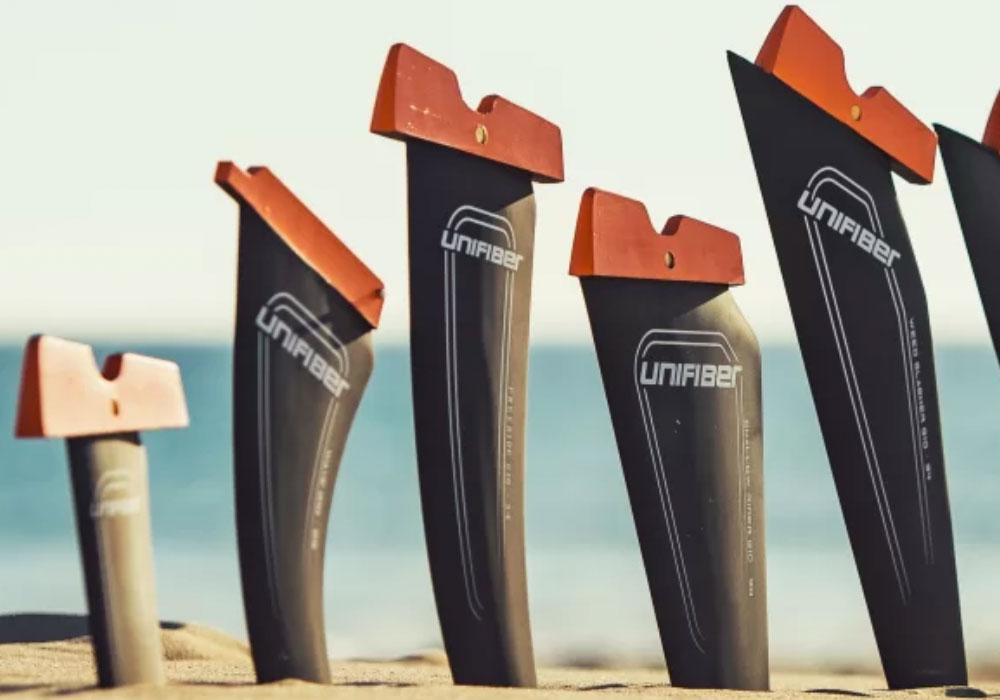
There are many different types of windsurf fins, such as slalom & race fins, wave & freestyle fins, and freeride fins. Each has specific characteristics that must match your board and sail.
- Board size: Larger windsurf boards require larger fins. A bigger fin provides more lift, allowing you to plane earlier in light wind. But a fin that’s too large can work against you—excessive lift raises the board too far out of the water and causes loss of control.
- Sail size: The larger your sail, the larger the the fin needs to be. A bigger sail demands more lift. Heavier windsurfers should also opt for a larger fin, as their additional weight helps maintain control.
- Riding style: Do you windsurf actively and pump a lot to get on plane? Then you can use a smaller fin for less drag and more control. With a smaller fin, it's smart to shorten your harness lines; otherwise, you increase the risk of spin-outs.
The right fin length
Choose a shorter fin when:
- your board generates too much lift
- your board keeps trying to head upwind
- jibing becomes difficult
- you lose overall control
Choose a longer fin when:
- your board feels like it's 'sticking' to the water
- you have trouble getting on plane
- you stall or stop in wind lulls

What windsurf fin length do I need?
The right fin length is essential for optimal speed, control, and planing. It is mainly determined by your sail size, board width, and body weight. Choosing a random length can significantly reduce your sailing performance.
Almost every fin comes with a chart of recommended lengths. Always check the chart specific to the fin type you’re choosing (for example, freeride, slalom, or wave). This is the quickest way to find the perfect match.
Key factors:
- Board width: Check your board (or look it up online) for the exact width. In the chart, you’ll find this value on the left side; it serves as the starting point for selecting the correct fin length.
- Sail size: Determine which sail size you use most often. Do you have multiple sails? Ideally, you’d use a different fin for each sail, but you can also select a single fin that best matches your most frequently used windsurf sail.
Tips for the Best Choice:
- Stick to the recommended values in the charts—they’re designed to provide the perfect balance between lift and control.
- If you deviate too much, you risk struggling to get on plane or experiencing frequent spin-outs.
Watch our tips & tricks video below for a clear explanation and examples of how to select the correct fin length.
Fin selector: quickly find your perfect fin
On the Select and Unifiber websites, you’ll find convenient fin selectors. By answering a few questions about your sailing style, weight, and board volume, you’ll immediately receive the ideal fin size for your setup.
Select – High-End Specialist
- Made in Europe with exceptionally consistent quality.
- High-end materials (fiberglass, carbon prepreg).
- Extensive range for slalom, speed, and formula.
- Perfect for surfers who refuse to compromise.
Unifiber – Smart All-Rounder
- Hand-shaped G10: strong and durable.
- Compact range that’s stable and easy to handle.
- Affordable ideal for beginners, recreational sailors, or as a second fin.
Special vin: weed fin

'THE RIGHT FIN LENGTH OFFERS THE BEST PERFORMANCE ON THE WATER'
FIN BOXES
You slide the fin into the fin box of your board. The type of box determines which fin you can use:
- US box: this fin box is most commonly used on (free)wave and freestyle windsurfboards, as these belong to the lighter class. The fin must be inserted into the board from below and fastened with a screw.
- Power box: this type is often used under freestyle boards. Suitable for the forces generated when using recreational fins up to about 50 cm in length.
- Tuttle box: Tuttle box fins are secured with two bolts through the deck of the board. Standard Tuttle is used for fins up to about 45 cm in length.
- Deep tuttle box: A similar head shape to standard tuttle, but extends higher for extra strength. Deep Tuttle is the usual standard for fins in the 45 cm to 70 cm range.
- Trim box: This type of fin is no longer in production and you will hardly encounter it anymore. But when your board does have a trim box it is suitable for fins up to about 50 cm.
- Multi conic box: Is a universal system that fits multiple types of box systems. The power box, tuttle box and trim box all fit in the multi conic box. This is super convenient because then you simply have more fin options.
- Slot box: The slot box is a lightweight surf style box it a popular system on a waveboard and freestyle waveboards that sail with shorter fins. The system is suitable for fin lengths up to about 19 cm.